For more than 135 years, healthcare in Omeo has been shaped by the determination of local communities to care for one another.
From the gold rush era to the present day, Omeo District Health has evolved alongside the region it serves, overcoming isolation, economic hardship, fire and changing healthcare needs to ensure people living in the High Country can access care close to home.
Gold Rush Beginnings
The story of Omeo District Health begins during Victoria's gold rush. By 1860, around 600 miners were working the Livingstone Creek goldfields, and Omeo had developed from a rough collection of tents and log huts into a thriving frontier settlement. Stores, hotels, blacksmiths, boarding houses and essential services began appearing throughout the township.
Healthcare in these early years was limited and often difficult to access. Illness or injury could be life-threatening in such a remote district. In 1873, Omeo's first qualified resident doctor, Dr Warren, commenced practice, providing much-needed medical care to the growing population.
The Need for a Hospital
By the late 1880s, the district faced significant public health challenges. With no reticulated water supply and rainwater commonly collected in wells, diseases such as typhoid, scarlet fever and diphtheria were widespread. Many lives were lost, reinforcing the need for a dedicated hospital.
In 1890, local residents began fundraising to establish a hospital for the district. A site was selected, the support of the Public Health Department was secured, and Omeo Hospital was formally incorporated on 19 October 1891.
The early years were not easy. The economic depression of the 1890s created funding challenges, delaying development and limiting resources. Despite these setbacks, the community remained committed to establishing local healthcare services for future generations.
Healthcare in a Remote District
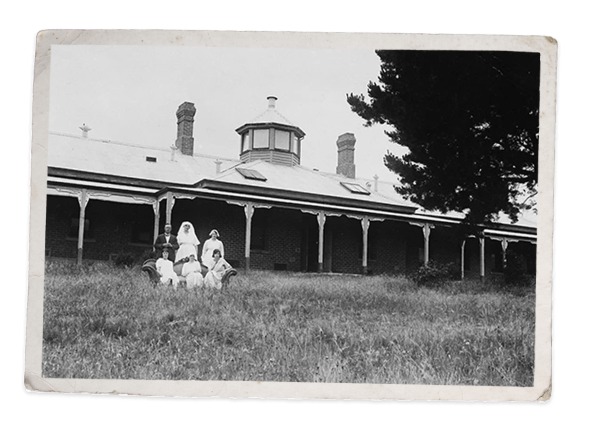
Life in the High Country presented unique challenges. Travel was slow, roads were unreliable and medical help could be many hours away. Hospital care remained basic, and for many years there were no local maternity facilities. Surgical procedures often required transfer to larger centres such as Sale or Bairnsdale, journeys that could be difficult and hazardous.
The hospital gradually expanded, with additional ward space added in the late 1890s. By 1902, the hospital provided accommodation for eight male and six female patients. Community fundraising groups, local organisations and volunteers played a vital role in supporting the hospital's operation and growth.
A Community That Supported Its Hospital
The history of Omeo Hospital is also the story of a community that repeatedly came together to protect and strengthen local healthcare.
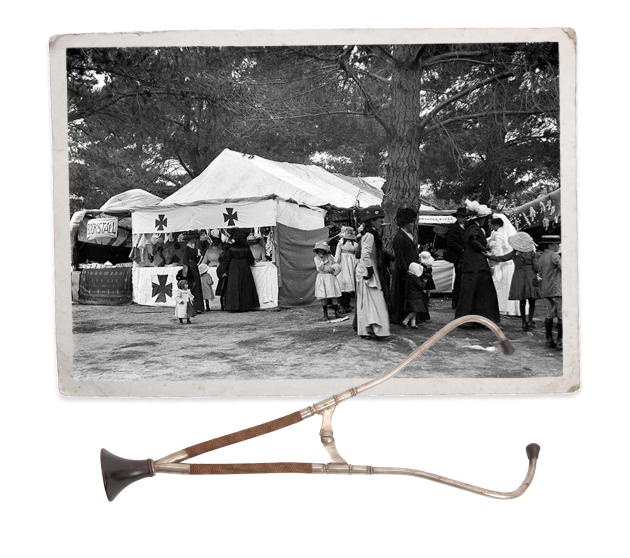
One of the most significant examples occurred in 1911 when the hospital faced serious financial difficulties following the decline of mining. Concerned that services may not survive, local residents organised a large Hospital Carnival to raise funds. The event included a grand parade, sporting competitions, entertainment, raffles and social activities that attracted visitors from across the district. The carnival proved a remarkable success and raised vital funds that helped secure the hospital's future.
Among the parade entries was a handmade "Jumbo" elephant costume, a feature that became part of Omeo folklore and remains one of the most recognised images in the district's healthcare history.
Bush Nursing and Outreach Services
As settlements developed throughout the district, healthcare extended beyond Omeo itself. Bush Nursing Centres at Benambra, Swifts Creek and Ensay became an important part of healthcare delivery across the region. These centres provided first aid, nursing care and temporary accommodation for patients awaiting medical attention.
Bush nurses often travelled by horseback to visit patients and provide care in isolated communities. Their contribution was invaluable at a time when reliable roads, ambulances and telecommunications did not exist.
Expanding Services
The 1920s and 1930s saw significant developments in local healthcare.
A dedicated infectious diseases ward was established in 1926, although conditions remained challenging and highlighted the ongoing need for improved facilities.
In 1931, the Lady Mitchell Wing opened on the hospital grounds. Funded through the will of local benefactor John Miller, it became the district's first dedicated maternity facility, providing local families with access to maternity care closer to home.
At the same time, the community and hospital worked together to improve public health, including campaigns to reduce the impact of infectious diseases such as diphtheria.
Fire, Rebuilding and Renewal
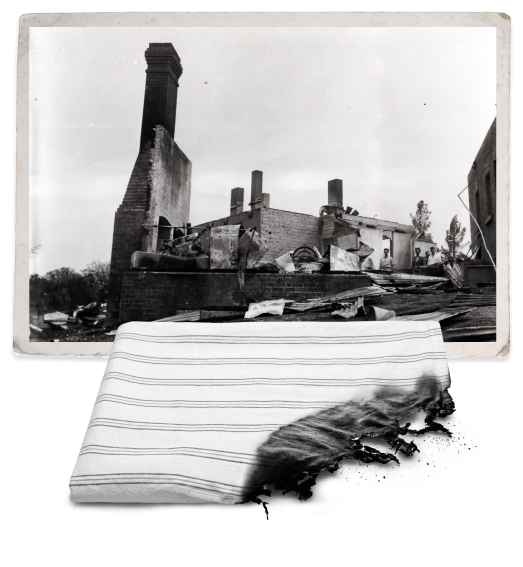
In 1939, catastrophe struck when Omeo Hospital was destroyed by fire. Patients and staff were evacuated, and healthcare services were rapidly re-established using temporary facilities throughout the community. The local vicarage, parish hall and other community resources were transformed into makeshift healthcare facilities almost overnight.
Despite losing buildings, equipment and records, the community rallied once again. A dedicated committee led fundraising efforts, secured a new site, developed plans and oversaw construction of a replacement hospital. Within a remarkably short period, enough funds had been raised to rebuild.
The new hospital and nurses' quarters were officially opened in 1940, marking the beginning of a new chapter in healthcare for the district.
Growing with the Community
The decades that followed brought further improvements, including the appointment of an Infant Welfare Sister in 1943, the provision of a dedicated doctor's residence in 1945 and the establishment of a volunteer ambulance service in 1949.
In 2005, a fully renovated Omeo District Health facility was officially opened, enhancing the organisation's ability to deliver contemporary healthcare services while continuing its long tradition of local care.
Throughout the twentieth and twenty-first centuries, generations of doctors, nurses, volunteers and community members continued to build upon the foundations laid by those who established the hospital in the 1890s.

Omeo District Health Today
Today, Omeo District Health serves communities across more than 5,500 square kilometres of East Gippsland and the Victorian High Country. The organisation provides a broad range of services including urgent care, primary healthcare, community health, residential aged care, home-based care, visiting specialist services and outreach programs.
Support for surrounding communities, including Benambra, Ensay, Swifts Creek, Cassilis, Bindi, Glen Wills and Anglers Rest, remains a vital part of the organisation's commitment to accessible local healthcare.
While healthcare has changed significantly since the days of the gold rush, the values that underpin Omeo District Health remain unchanged: community, resilience, compassion and care close to home. The history of Omeo District Health is ultimately a story of the people who built it, supported it and ensured that quality healthcare remained available to generations of High Country residents.

Historical Highlights
1873 – Omeo's first qualified resident doctor, Dr Warren, commenced practice.
1890 – Community fundraising began for the establishment of a local hospital.
1891 – Omeo Hospital was formally incorporated on 19 October.
1911 – The Hospital Carnival raised vital funds during a period of financial hardship.
1926 – A dedicated infectious diseases ward was established.
1931 – The Lady Mitchell Wing opened as the district's first dedicated maternity facility.
1939 – Omeo Hospital was destroyed by fire and healthcare services continued through temporary community facilities.
1940 – A new hospital and nurses' quarters officially opened.
1943 – An Infant Welfare Sister was appointed to support local families.
1945 – A dedicated doctor's residence was established.
1949 – The district's volunteer ambulance service commenced.
2005 – The fully renovated Omeo District Health facility was officially opened.
Today – Omeo District Health continues to provide healthcare, aged care and community services across the High Country.
Omeo Historical Society
A special thanks to the team at the Omeo Historical Society for their excellent work! Please become a member and support their ongoing efforts.
For more information visit omeo.org.au.
Delivers better outcomes for our rural community